
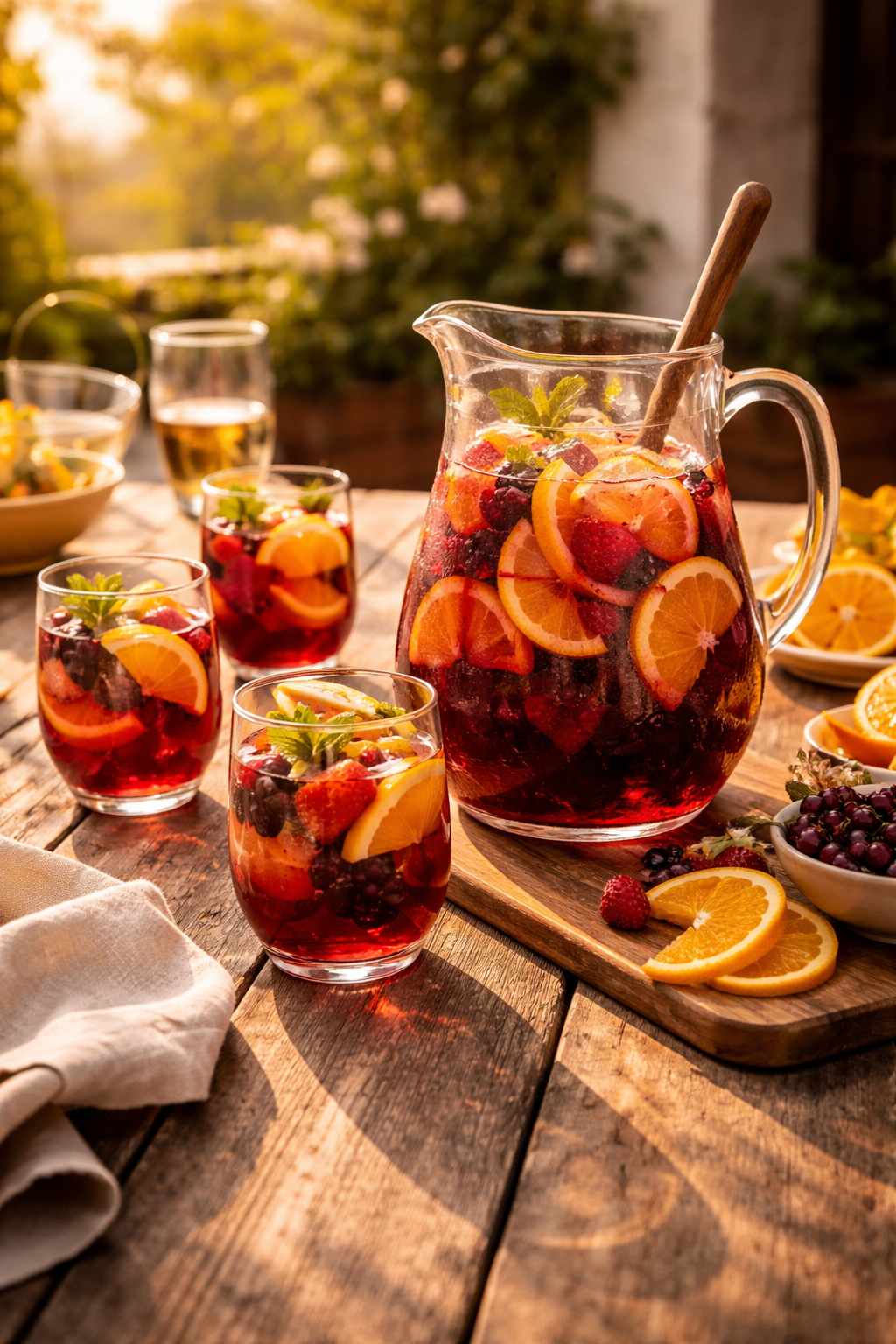
Not all of Spain’s wine culture is found in cellars, classifications or ageing categories. Some of it lives outdoors — on terraces, in summer evenings, in the easy rhythm of shared glasses. Sangria belongs to that world. It is not a formal wine style, nor a product of strict appellation rules, but rather a tradition: wine transformed through fruit, freshness and conviviality.
At its simplest, Sangria is made from red wine, citrus, and a touch of sweetness, sometimes lifted by spices or a small addition of brandy. What matters is not precision, but balance — and above all, atmosphere. It is a drink designed not for analysis, but for company.
There is, however, a quiet seriousness behind even this apparent simplicity. The choice of base wine matters more than one might expect. A clean, fruit-driven Spanish red — often Tempranillo-based — gives structure, while citrus and dilution soften the edges. Done well, Sangria remains recognisably wine, not merely a flavoured beverage.
Traditional Red Sangria (house style)
Fresh, fruit-forward and lightly spiced, with notes of orange, lemon and ripe berries. The texture is soft, the tannins subdued, and the finish refreshing rather than complex. Best served well chilled, in good company. Score: 6.8/10
White Sangria (Sangria Blanca)
A lighter and more aromatic variation, often built on white wine with peach, apple and citrus notes. Fresher and more delicate than the red version, with a slightly more lifted profile and a clean, summery finish. Score: 6.6/10